

Search in 2026 feels less like a list of links and more like a conversation already in progress. Google answers questions. Shows visuals. Surfaces products. Recommends local businesses. Connects ideas automatically.
That shift changes how you win visibility. Ranking still matters. But presence inside SERP features matters more. These features pull attention away from traditional blue links and toward rich, interactive elements that satisfy intent immediately.
Quick refresher: SERP stands for Search Engine Results Page. That’s the page you land on after you type a query into Google or another search engine. In 2026, that page looks a whole lot different. Instead of a simple list of links, SERPs now feature AI summaries, images, videos, maps, products and rich panels designed to answer questions faster and more visually.
If you want SEO that works for humans and LLMs, you need to understand how these SERP features function, why search keeps pushing them forward and how your content earns a seat inside them. Let’s walk through the five SERP features shaping search behavior in 2026 and exactly how you should respond.
1. AI Overviews: Where Search Answers the Question Before the Click
AI Overviews sit right at the top of the results page. They summarize answers pulled from multiple trusted sources and present them as a clear, scannable response. Users see context, steps and takeaways without scrolling.
This feature changes expectations fast. Searchers now want clarity immediately. They scan. They skim. They trust the summary and click deeper only when curiosity spikes.

Why AI Overviews Keep Expanding
AI Overviews reward content that explains, not teases. Search prefers pages that answer the full question rather than dangling half answers behind clicks.
LLMs need structure. They pull from pages that organize ideas cleanly and write like a human teacher instead of a keyword blender.
What we recommend:
-
Add clear summaries at the top of important pages
-
Break complex topics into logical steps and sections
-
Write sentences that stand alone without extra context
If your content reads like a helpful explainer someone would bookmark, AI Overviews notice.
2. Knowledge Graphs: How Search Decides Who You Are and What You Connect To
Knowledge Graphs help search understand entities, not pages. Brands, people, products, locations, services and topics all connect through structured relationships. This feature powers knowledge panels, brand cards, FAQs and rich results that sit beside or above traditional listings.
Search no longer asks, “What page answers this?” Search asks, “Who or what owns this topic?”
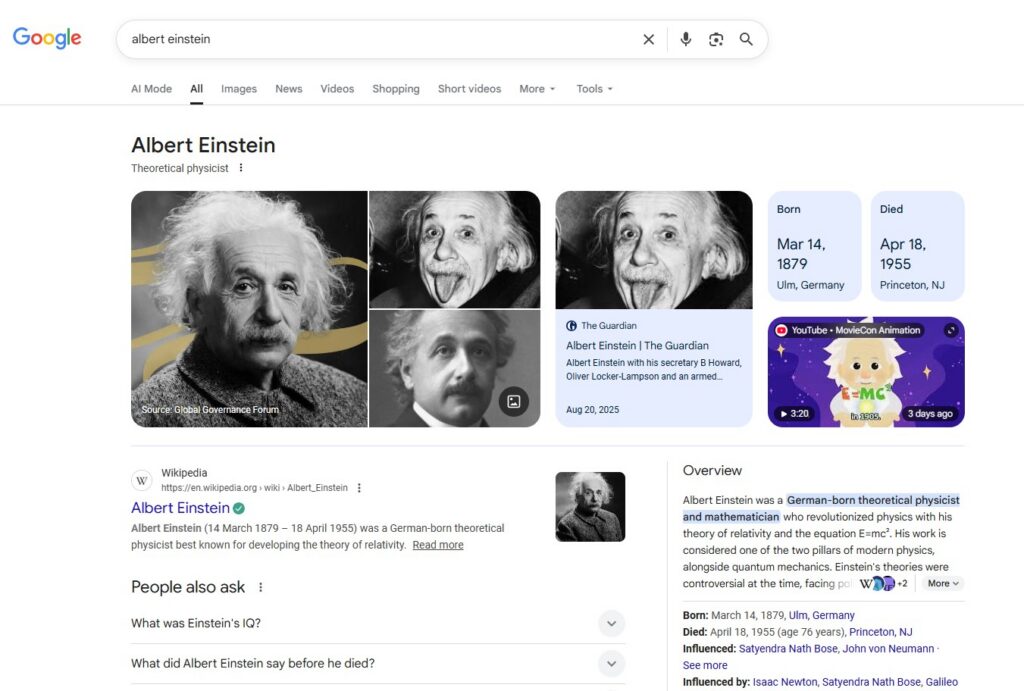
Why Knowledge Graphs Matter More in 2026
LLMs rely on context. They connect dots between ideas. Knowledge Graphs provide that connective tissue.
When search understands your brand as a distinct entity with clear relationships, your content surfaces more consistently across features, summaries and recommendations.
What we recommend:
-
Use structured data and schema intentionally
-
Create content clusters that reinforce topic authority
-
Align brand messaging across your site and profiles
When search recognizes your brand as a reliable source, visibility compounds instead of resets with every new post.
3. Images & Videos: When Visual Content Becomes the First Result
Images and videos now dominate many results pages. Visual packs appear above text results, between summaries and inside product and local features.
Users notice visuals first. Visuals set expectations. Visuals guide clicks. Search understands that behavior and responds accordingly.

Why Visual SERP Features Keep Winning
Humans process visuals faster than text. Video builds trust quickly. Images confirm relevance instantly.
Search rewards media that clarifies a topic rather than decorates a page. Context matters more than polish.
What we recommend:
-
Use images that explain concepts, not just brand aesthetics
-
Add descriptive alt text tied to user intent
-
Include video transcripts and structured captions
If visuals answer questions on their own, search pushes them forward.
4. Local Packs: Where Intent Turns to Action
Local Packs bundle map results, business listings, reviews and quick actions into one high-visibility feature. Calls. Directions. Bookings. Decisions happen here.
Local search behavior signals urgency. People search locally when they want something now.

Why Local Packs Carry So Much Weight
Mobile search dominates local discovery. Search prioritizes businesses that feel trustworthy, active and responsive.
Reviews, photos, hours and updates influence placement just as much as keywords.
What we recommend:
-
Keep listings accurate across every platform
-
Respond to reviews with real personality
-
Add photos and updates that reflect current offerings
Your local profile often serves as your first impression. Treat it like a homepage, not a checklist.
5. Popular Products: When Search Becomes a Storefront
Popular Products display product images, pricing, reviews and availability directly inside search results. Users compare and decide before visiting your site.
This feature shortens the buying journey dramatically.

Why Product SERP Features Continue Growing
Searchers trust visual confirmation and peer validation. When they see price, rating and stock status instantly, confidence rises.
Search wants fewer steps between curiosity and conversion.
What we recommend:
-
Implement detailed product schema
-
Keep pricing and availability current
-
Write product descriptions that answer buying questions
When your product shows clearly and confidently, search rewards that clarity with placement.
The Big Picture: What SERP Features Tell You About the Future of Search
SERP features reveal a clear pattern. Search prioritizes clarity over cleverness. Context over tricks. Experience over links.
You win visibility in 2026 by:
-
Teaching instead of teasing
-
Structuring content for humans and machines
-
Showing relevance visually
-
Earning trust locally
-
Making products easy to understand fast
SEO no longer revolves around ranking a page. SEO now revolves around showing up meaningfully wherever attention flows. That shift opens a much bigger playground.
And if you know how to play, search rewards you generously.